



The difference between winning and losing isn’t always talent. Sometimes, it’s what happens in the six inches between your ears.”
Every athlete has experienced it.
The penalty kick you’ve scored hundreds of times suddenly sails over the crossbar. The free throw you’ve made all season feels unfamiliar. Your mind races, your heart pounds, and movements that once felt effortless suddenly become mechanical.
This phenomenon is known as choking under pressure, and it’s one of the most studied topics in sports psychology.
The encouraging news? Science suggests it’s not simply about “being mentally tough.” Understanding why choking happens is the first step towards preventing it.
What Is Choking Under Pressure?
Researchers define choking as a significant decline in performance that occurs despite having the skills to succeed, specifically when the stakes are high.
Unlike poor preparation or lack of ability, choking happens because pressure changes how the brain controls movement and decision-making.
Two main psychological theories explain why this occurs.
1. The Brain Starts Thinking Too Much
Elite athletes perform many skills automatically.
Whether it’s serving a tennis ball, striking a football, or shooting a basketball, years of practice allow these movements to happen with very little conscious thought.
Under pressure, however, athletes often begin analysing movements that normally run on autopilot.
Instead of trusting their training, they consciously control every detail.
Ironically, this increased effort disrupts smooth movement—a phenomenon known as explicit monitoring or self-focus theory.
In other words, trying harder can actually make performance worse.
2. Anxiety Steals Your Attention
Pressure doesn’t only affect movement—it also affects attention.
According to Attentional Control Theory, anxiety shifts focus away from task-relevant information towards distractions such as:
- Fear of failure
- Crowd reactions
- Previous mistakes
- Outcome-focused thinking
- Self-doubt
Instead of focusing on executing the next action, the athlete becomes consumed by thoughts about what might happen if they fail.
The result is slower decision-making, reduced accuracy, and poorer performance.
Can You Train Yourself Not to Choke?
Fortunately, yes.
The strongest evidence supports psychological training rather than relying on motivation alone.
Research consistently shows benefits from:
* Pre-performance routines that create consistency before competition.
* Pressure training, where athletes practise under realistic competitive conditions.
* Quiet Eye training, which improves visual focus before movement.
* Attention-control techniques, including breathing exercises and mindfulness.
These strategies help athletes remain externally focused and reduce the tendency to overthink.
Can Supplements Help?
Supplements won’t stop an athlete from choking.
However, they may support some of the biological systems involved in focus, stress resilience, and cognitive performance, helping athletes perform at their best when combined with appropriate mental skills training.
Current evidence suggests varying levels of support for different ingredients.
|
Supplement |
Potential Role |
|---|---|
|
Caffeine |
Improves alertness, reaction time, vigilance, and reduces perceived exertion before competition. |
|
Creatine Monohydrate |
Supports ATP regeneration and may help maintain cognitive performance during fatigue and sleep deprivation. |
|
Beetroot Nitrate |
Improves oxygen efficiency and endurance economy, particularly in prolonged events. |
|
Beta-Alanine |
Helps buffer acidity during repeated high-intensity efforts but does not directly influence psychological pressure. |
|
Iron (if deficient) |
Correcting deficiency improves fatigue, work capacity, and endurance. |
|
Magnesium, Vitamin D and B Vitamins |
Important for normal muscle, nervous system and energy metabolism, particularly where dietary intake is inadequate. |
|
Ashwagandha & Rhodiola rosea |
Adaptogens that may support stress resilience and reduce fatigue perception, although evidence for pressure performance remains limited. |
|
L-Theanine |
May promote a calmer state of alertness and support attention, particularly when combined with caffeine. |
|
CoQ10 |
Supports mitochondrial energy production and recovery rather than acute psychological performance. |
Where Formexc Fits
At Formexc, we believe peak performance is built on three pillars:
- Evidence-based nutrition
- Intelligent training
- Consistent recovery
Our formulations are designed to support the physiological foundations of performance—including energy metabolism, focus, stress resilience, and recovery—using carefully selected ingredients backed by scientific research.
For example:
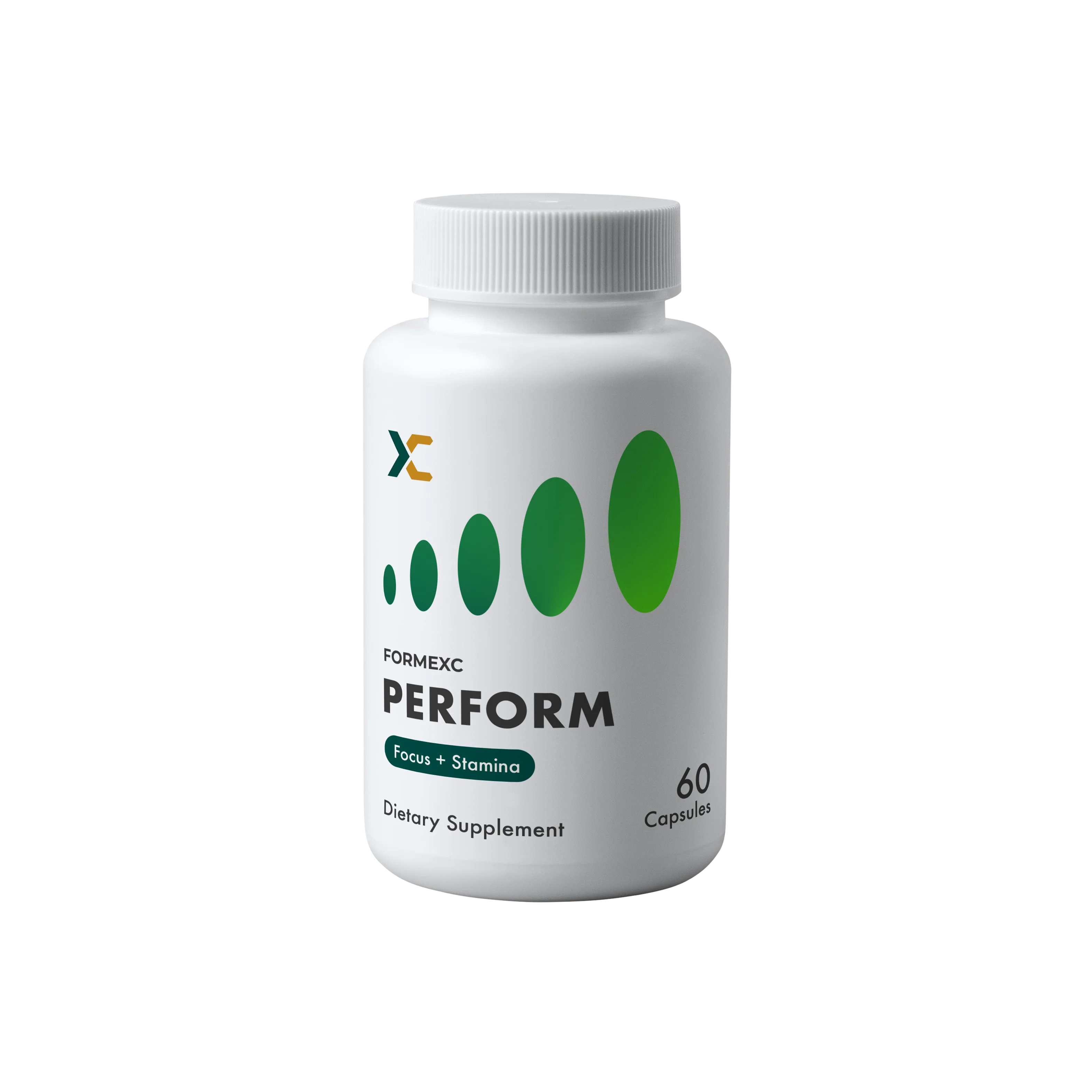
- Formexc PERFORM includes ingredients such as L-tyrosine and CoQ10, chosen to support cognitive and physical performance during demanding training and competition.
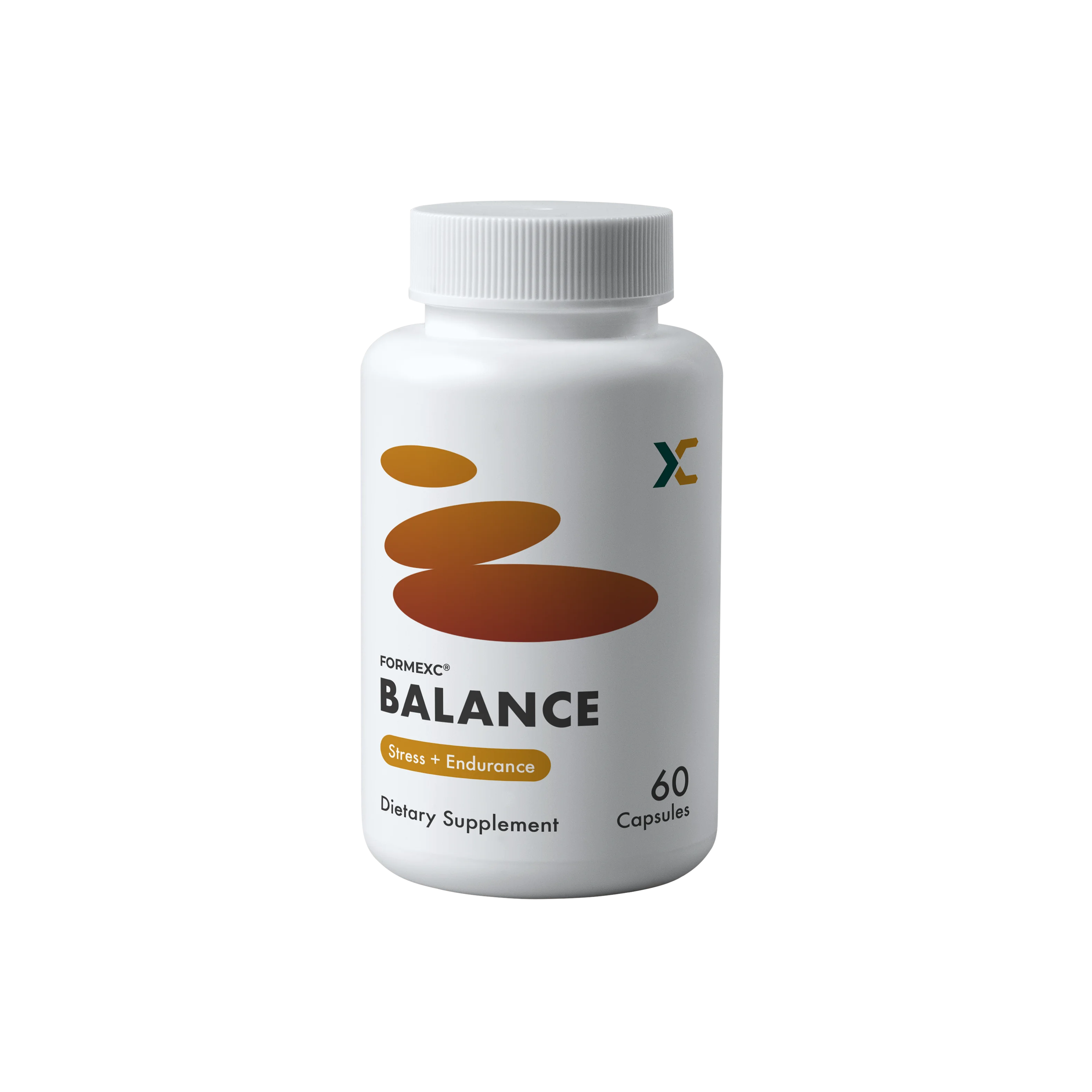
- Formexc BALANCE contains adaptogenic botanicals including KSM-66® Ashwagandha, Rhodiola rosea, and Persian saffron, selected to support resilience to everyday stress and overall wellbeing.
While no supplement can prevent choking under pressure, combining evidence-based nutrition with psychological skills training, quality sleep, and structured practice can help athletes perform more consistently when it matters most.
The Bottom Line
Choking under pressure isn’t a sign of weakness—it reflects how the brain responds to stress.
The most effective solutions remain psychological: training under pressure, developing consistent routines, and learning to direct attention towards the task rather than the outcome.
Nutrition and supplementation can complement this process by supporting energy production, cognitive function, recovery, and stress resilience, but they should always be viewed as part of a broader performance strategy.
At the highest level, success isn’t about eliminating pressure—it’s about learning to perform despite it.
Click here to explore Formexc products, formulated with natural and organic ingredients to support your physical health, mental well-being, and performance.
Use the code "NEW10" to get 10% off your first order.
Did you find this article useful? Share it with a friend and spread the love for healthy living.
Your success fuels our motivation.
Love,
Team Formexc 💚💛
References
Baumeister, R.F. (1984). Choking under pressure: Self-consciousness and paradoxical effects of incentives on skillful performance. Journal of Personality and Social Psychology, 46(3), 610–620.
Beilock, S.L. & Carr, T.H. (2001). On the fragility of skilled performance. Journal of Experimental Psychology: General, 130(4), 701–725.
Eysenck, M.W., Derakshan, N., Santos, R. & Calvo, M.G. (2007). Anxiety and cognitive performance: Attentional Control Theory. Emotion, 7(2), 336–353.
Hill, D.M., Hanton, S., Matthews, N. & Fleming, S. (2010). Choking in sport: A review. International Review of Sport and Exercise Psychology, 3(1), 24–39.
Mesagno, C. & Beckmann, J. (2017). Choking under pressure: Theoretical models and interventions. Current Opinion in Psychology, 16, 170–175.
Guest, N.S. et al. (2021). International Society of Sports Nutrition position stand: Caffeine and exercise performance. Journal of the International Society of Sports Nutrition, 18, 1.
Kreider, R.B. et al. (2022). ISSN Position Stand: Creatine Supplementation. Journal of the International Society of Sports Nutrition, 19, 244–307.